
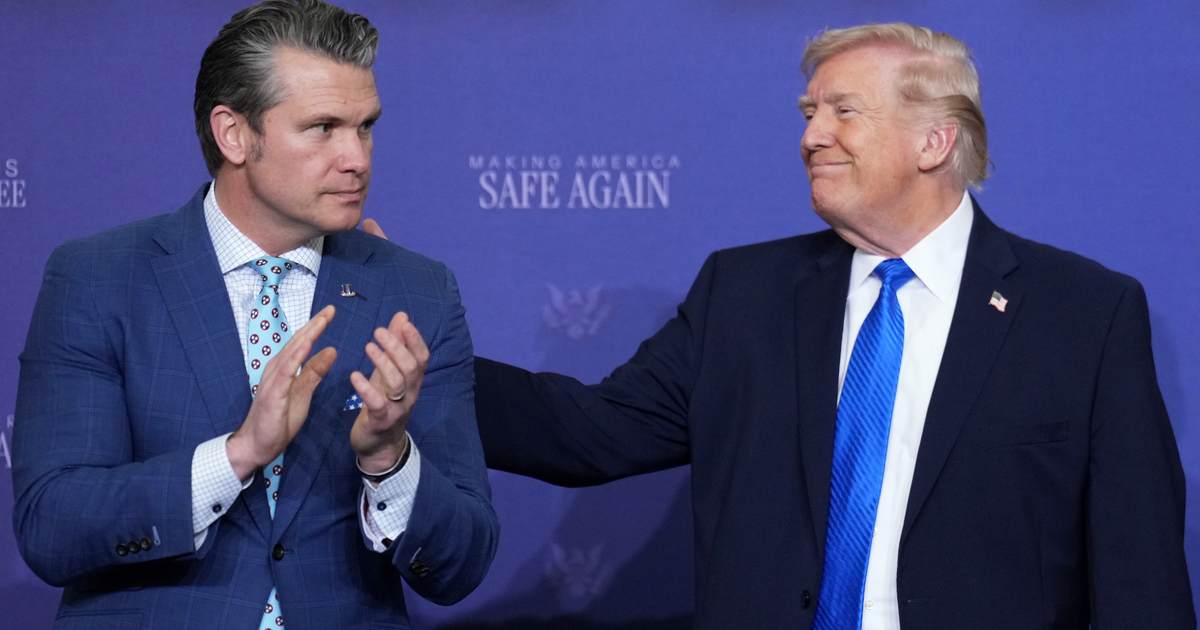

The Massie impeachment push against Secretary of War Pete Hegseth is being read by Washington Examiner columnist Byron York as something larger than a case against Hegseth. Rep. Thomas Massie, a Republican from Kentucky, has put forward eight articles, but York says several focus on decisions tied to the president’s authority to wage war. That makes the effort look like a backdoor attempt to reach President Trump, even though Massie’s personal intention is not established. The House was expected to take a key procedural vote tonight, with an impeachment vote reportedly possible tomorrow. The central question is whether Congress is examining Hegseth’s conduct or using his office as a route into a larger fight with Trump.
The political backdrop is impossible to ignore. Massie lost a Republican primary in Kentucky and is scheduled to leave Congress on January 3. York described him as racing the clock and trying to create damage before his departure, but that is York’s characterization of the motive, not a proven statement from Massie. The articles arrive during Massie’s final stretch in office. They also show how quickly a dispute over military policy can become a fight over presidential power, party control and the purpose of impeachment.
The Massie Impeachment Push Has Eight Articles, but One Larger Target
The articles cover a wide range of military and foreign policy actions. Articles 1, 2 and 3 accuse Hegseth of violating the War Powers Resolution by waging war in Iran. Article 4 concerns the accidental hit on an Iranian school, according to York’s breakdown. Article 5 addresses the drug boat attacks, while Article 6 concerns retaliation against Sen. Mark Kelly over a video saying service members can refuse an unlawful order. Article 7 addresses the Venezuela attack and taking Nicolas Maduro into United States custody, and Article 8 concerns strikes against the Houthis in Yemen.
York’s argument is that the list itself exposes the problem. He says Articles 1, 2, 3, 5, 7 and 8 concern the president’s constitutional authority to wage war, rather than actions for which Hegseth is plainly the central decision-maker. Under that reading, anyone seeking impeachment over those decisions should be looking at the president, not substituting the secretary of war for him. That is an interpretation of the articles, not a final ruling on their legal merit. Still, it explains why York sees the Hegseth effort as a possible backdoor route to Trump.
Reading through Thomas Massie's articles of impeachment against Pete Hegseth. There are 8 articles. Articles 1, 2, and 3 all accuse Hegseth of violating the War Powers Resolution by waging war in Iran. You might ask yourself: Did Pete Hegseth order US forces into action in Iran?…
— Byron York (@ByronYork) November 10, 2026
The Hegseth Question Is Who Ordered What
The question of responsibility becomes sharper when the articles are separated. York asks whether Hegseth ordered United States forces into action in Iran, then points out that President Trump did so. Article 4 involves what the breakdown calls an accident by United States forces, but it provides no additional details about how that incident occurred. Article 6, involving Kelly, is identified as the only matter in which Hegseth appears to bear some direct responsibility. That distinction does not dismiss the allegations, but it demands precision about who made each decision and what authority each official held.
Hegseth rejected the effort in remarks carried by RedWave Press. He said, “What one disgruntled and defeated congressman is attempting is not oversight. And it’s not accountability. It’s a political spectacle, a personal manifesto driven by ego and resentment.” He also said, “It’s a farce and it’s a stunt. And everybody knows it.” Hegseth argued the articles would damage the president, the country and the warriors who defend it, which is his characterization of the stakes. Massie’s articles are the case being advanced against Hegseth, while Hegseth’s remarks are his defense. The clash shows that the fight is now personal and political as well as constitutional.
Policy Dispute or Impeachment Theater
Hegseth also framed the dispute as a question of what impeachment is supposed to be. He said policy disagreements should be handled through legislation, debate or the next presidential election, not by turning the House and Senate floors into a show trial. He argued that no Secretary of War or Secretary of Defense has ever been impeached for carrying out lawful military operations, pointing to actions under Reagan, Clinton, Obama and Biden. That historical comparison is part of his defense, not a court judgment on Massie’s articles. It nevertheless gives Republicans a clear choice: treat the effort as oversight or treat it as a fight over command authority.
York’s reading is more damaging to Massie because it suggests the secretary is being used as a stand-in. If most of the articles concern presidential war powers, the public debate will focus less on Hegseth’s individual conduct and more on whether Trump’s decisions were lawful and wise. That may be why Democrats could find the proceeding useful, regardless of what Massie intended. At the same time, calling it a backdoor impeachment of Trump remains an interpretation, not proof of a hidden plan. The strongest factual point is narrower: the articles place Hegseth in disputes that, by York’s account, largely center on presidential authority.
The Clock Is Now Part of the Story
The timing gives the impeachment effort an additional layer. Massie was defeated in a Republican primary and is due to leave Congress on January 3, so York sees the articles as an attempt to use his remaining time for maximum disruption. The wording is harsh, and it should be treated as commentary rather than established fact about Massie’s motives. What can be stated plainly is that the proposal comes near the end of his congressional tenure and targets Hegseth during a dispute over Trump’s military policy. That makes the proceeding consequential even if it never produces a final judgment against Hegseth. It can still force Republicans to spend floor time defending the administration or answering questions about war powers.
Lisa Desjardins reported that the House would take a key procedural vote at 5:30p and that, unless something dramatic changed, the vote was expected to break in favor of impeachment. Her reported schedule had the House leaving for the day afterward, with an impeachment vote expected tomorrow. That was a forecast of the process, not a result. The immediate test is whether the articles advance and how members explain that decision to voters. If the measure advances, the arguments York and Hegseth raised will move from commentary into the center of a formal congressional fight. If it does not, Massie’s final congressional push will still have put presidential war powers on the floor.
WE’D LOVE TO HEAR YOUR THOUGHTS! PLEASE COMMENT BELOW.
Find more articles like this at beardsofliberty.com.
Leave a Comment