
There are stories that demand outrage, and then there are stories that demand something even more basic: answers. This one falls squarely in the second category—though the longer it goes unanswered, the closer it drifts to the first.
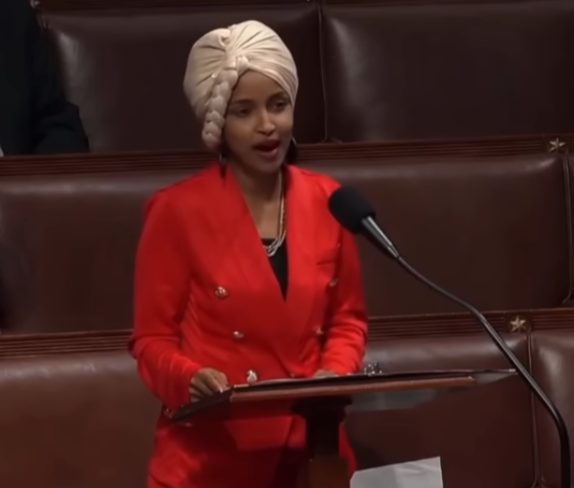
Over the past week, renewed attention has landed on Rep. Ilhan Omar, Minnesota’s most protected politician, following a televised discussion with House Majority Whip Tom Emmer that raised questions most corporate media outlets still refuse to touch. The topic wasn’t ideology. It wasn’t foreign policy. It wasn’t even one of Omar’s many headline-grabbing statements. It was money, fraud, and a state government that appears either asleep at the wheel—or very intentionally looking the other way.
What follows is not an accusation. It is a compilation of publicly reported facts, documented fraud cases, and unanswered questions that any functioning democracy should be demanding clarity on. The problem is not that these questions are being asked. The problem is how aggressively they’re being avoided.
A Net Worth That Defies Math and Common Sense
Let’s start with the number that stopped people cold. According to public financial disclosures discussed in the segment, Ilhan Omar’s reported net worth allegedly rose from roughly $65,000 to somewhere between $26 million and $31 million in just a few years. That’s not a typo. That’s not a rounding error. That’s the kind of jump that would make Bernie Madoff ask for investment tips.
Omar earns a congressional salary of roughly $172,000 a year. From that, members of Congress pay for housing, travel, health benefits, and—last time anyone checked—taxes. Even under the rosiest assumptions, there is no plausible way to reach that level of wealth accumulation through salary alone. This isn’t conservative spin. It’s arithmetic.
No one on television claimed Omar committed a crime. What was claimed—repeatedly—is that the numbers make no sense and deserve scrutiny. In any other state, involving any other politician, that would be the beginning of an investigation, not the end of a conversation.
The Largest Pandemic Fraud Case in American History
To understand why the questions persist, you have to look at Minnesota’s now-infamous Feeding Our Future scandal. Federal prosecutors have described it as the single largest pandemic-related fraud scheme in the United States, involving roughly $250 million in stolen taxpayer funds meant to feed hungry children during COVID.
As of now, 87 people have been charged. Prosecutors allege the money was used not for meals, but for luxury cars, real estate, jewelry, first-class international travel, and vacations so extravagant they included private overwater villas in the Maldives. Surveillance footage reportedly shows defendants popping champagne while taxpayers footed the bill.
These are not conspiracy theories. These are federal indictments.
Tom Emmer clarified an important distinction: Ilhan Omar did not create Feeding Our Future. However, he noted she was politically involved in the creation of pandemic-era nutrition funding mechanisms that were later exploited. Whether that involvement was direct, indirect, or purely legislative is precisely the point—no one has bothered to fully explain it.
When Oversight Becomes Optional
Here’s where the story stops being about one congresswoman and starts being about an entire system. According to Emmer, Minnesota’s fraud problem extends well beyond Feeding Our Future. He cited estimates suggesting more than $1 billion in combined fraud across programs like Medicaid and pandemic relief.
That scale of theft does not happen in a vacuum. It requires failed safeguards, ignored warnings, and officials who either couldn’t or wouldn’t act.
Emmer pointed directly at Governor Tim Walz and Attorney General Keith Ellison, alleging that investigations were stalled or outright blocked. He claimed Ellison required personal approval for investigations—and then failed to approve them—allowing fraud to metastasize for years.
At some point, incompetence and complicity begin to look indistinguishable.
Identity Politics as a Shield, Not a Solution
When Governor Walz was asked about the scandal, his response was telling. Rather than address the fraud itself, he warned against “demonizing the Somali community” and emphasized welcoming more refugees.
That response might sound compassionate, but it avoids the actual issue entirely. No one is accusing an entire community. Federal prosecutors aren’t racists. Grand juries don’t operate on prejudice. Crime statistics don’t disappear because acknowledging them is uncomfortable.
Calling out criminal activity is not demonization. It’s governance.
Yet in Minnesota, any attempt to ask hard questions is instantly reframed as bigotry. That tactic doesn’t protect innocent people—it protects corrupt systems. And it ensures the next fraud scheme will be even bigger, because no one will fear consequences.
The Marriage Question No One Will Touch
Then there’s the story that never goes away, no matter how aggressively it’s ignored. Allegations that Ilhan Omar married her brother in 2009 to facilitate immigration status have circulated for years, backed by a publicly available marriage certificate and investigative reporting dating back more than a decade.
Emmer noted that statute-of-limitations issues may complicate criminal proceedings. He also said the lack of official records from Somalia has made verification difficult, potentially requiring DNA evidence.
Here’s the key point: this story has never been definitively resolved. Not disproven. Not confirmed. Just buried.
In any sane media environment, a sitting member of Congress facing unresolved allegations of immigration fraud would be investigated until the matter was settled. In Minnesota, the press reportedly declined to pursue it. Silence became policy.
When the Media Becomes the Fourth Branch of Protection
Emmer didn’t mince words about Minnesota’s press corps. He argued the state lacks a functioning “fourth estate”—a media willing to challenge power rather than defend it. That criticism feels uncomfortably accurate.
It wasn’t local reporters who revived this story. It wasn’t investigative journalists digging through records. It took a national television segment and a Republican congressman to restate questions that should have been asked years ago.
Only when Donald Trump publicly called attention to Minnesota’s fraud crisis did broader scrutiny begin. That alone should alarm anyone who believes accountability shouldn’t depend on political alignment.
Where the Money May Have Gone
Perhaps the most chilling allegation raised in the discussion involved overseas money flows. Emmer referenced statements from the U.S. Treasury indicating concerns that some fraud proceeds may have been routed through informal money service businesses linked to Al-Shabaab, a designated terrorist organization.
To be clear: no one accused Ilhan Omar of funding terrorism. But the idea that taxpayer dollars stolen from hungry children could end up financing extremists overseas is not partisan rhetoric—it’s a national security nightmare.
If even a fraction of that allegation proves true, the failure to investigate aggressively becomes unforgivable.
Accountability Is Not Optional
The recurring theme in this story isn’t guilt. It’s avoidance. The questions are straightforward:
How did such massive fraud occur under state supervision?
Why were investigations delayed or blocked?
Why does one congresswoman’s reported wealth defy explanation?
Why have serious allegations never been conclusively resolved?
If the answers exonerate everyone involved, then transparency should be welcomed. If they don’t, accountability must follow—no matter how powerful or protected the individuals may be.
This is not about politics. It’s about trust. And trust, once broken, is not restored by silence.
The Bottom Line
Minnesota’s fraud crisis didn’t appear overnight, and it won’t disappear on its own. It flourished because oversight failed, leadership deflected, and the media looked away. Ilhan Omar may or may not be at the center of it—but the refusal to answer legitimate questions ensures the story will only grow.
Asking questions is not extremism. Demanding answers is not hatred. It’s the bare minimum requirement of self-government.
And the longer those in power avoid the truth, the louder those questions will become.
WE’D LOVE TO HEAR YOUR THOUGHTS! PLEASE COMMENT BELOW.
JIMMY
Find more articles like this at steadfastandloyal.com.
h/t: Steadfast and Loyal
IMO, Omar should be shipped back to where she came from and her citizenship rescinded. And when she goes, she goes with the amount of money she came here with and not one red cent more! The other alternative is her being charged with treason since she says the only country she loves is Somalia and the sentence for treason is death. No appeals, just follow through with the sentence.