
When “All of Israel Is Occupied,” the Mask Comes Off
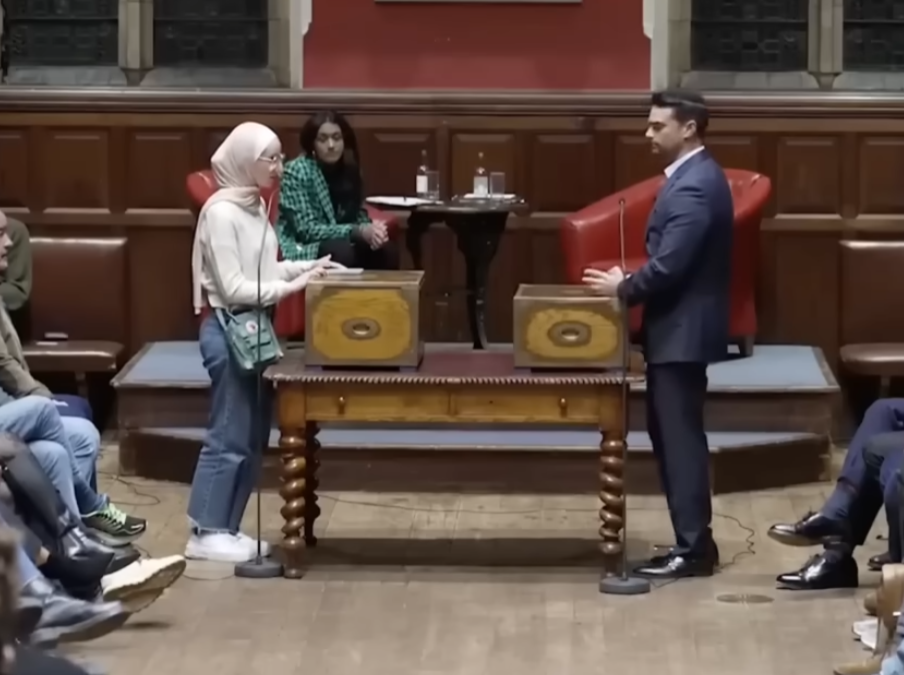
There is a moment in this exchange where the entire argument collapses into clarity: when pressed to define “occupied Palestine,” the answer is blunt—all of Israel. That admission matters because it confirms what many conservatives have warned for years: for a loud segment of activists, this isn’t about settlements, borders, or policy disagreements; it’s about erasing Israel altogether. Once that line is crossed, every previous appeal to “peaceful resistance” becomes rhetorical camouflage. This is why debates like this are so revealing, especially when someone is willing to say the quiet part out loud and own the implication that the Jewish state itself is illegitimate.
Credit Where It’s Due: Ben Shapiro Goes Into the Lion’s Den
Regardless of where one stands, it’s worth acknowledging that Ben Shapiro consistently goes into hostile environments to argue his case rather than shouting from safe platforms. In this exchange, he doesn’t dodge questions, doesn’t retreat to slogans, and doesn’t rely on emotional theatrics. He asks for definitions, presses for moral clarity, and exposes contradictions—knowing full well the audience is predisposed against him. That willingness to engage directly is rare, and it’s precisely why moments like this resonate: real arguments, real stakes, no editing tricks.
The “Peaceful Resistance” Myth and the Great March of Return
The claim that the “Great March of Return” was purely peaceful collapses under even minimal scrutiny. While some civilians did protest without violence, the movement itself was organized and exploited by Hamas, which used the crowds as cover for arson attacks, Molotov cocktails, and incendiary balloons that burned Israeli farmland. Pretending these elements didn’t exist is not ignorance—it’s narrative laundering. Serious discussion requires acknowledging that “peaceful” and “weaponized” can coexist in the same event, especially when terror groups deliberately blur that line.
When Definitions Matter More Than Emotion
One of the most telling dynamics in the exchange is how emotional appeals replace definitions. The repeated refusal to define “occupation” until finally conceding that it includes all of Israel exposes the intellectual weakness of the position. Definitions matter because they reveal intent. If Israel has no right to exist, then no Israeli action—defensive or otherwise—can ever be justified under that worldview. That’s not a peace argument; it’s a zero-sum demand dressed up as humanitarian concern.
Moral Equivalence: The Most Dangerous Lie in Modern Discourse
The heart of the debate centers on a false moral equivalence: the idea that Israel and Hamas are doing “the same thing.” They are not. Intentionally entering civilian homes to murder families is categorically different from targeting terrorists who embed themselves among civilians. One is the deliberate targeting of innocents; the other is a tragic consequence of urban warfare against an enemy that hides behind its own population. Collapsing that distinction isn’t nuance—it’s moral vandalism.
Civilian Casualties Are Tragic—But Intent Still Matters
Civilian deaths are horrifying, whether in Gaza, Israel, or anywhere else. Acknowledging that reality does not require abandoning moral reasoning. The question is not whether civilians die in war—they always have—but why and how. When terrorists deliberately use schools, hospitals, and apartment buildings as shields, they are committing war crimes under the Geneva Conventions. Granting immunity to those tactics incentivizes the very behavior that maximizes civilian suffering.
The Numbers Game and Emotional Blackmail
Another tactic on display is the weaponization of casualty statistics. Raw numbers are used to imply guilt without context, as if higher civilian deaths automatically equal moral failure. History exposes how flawed that logic is. In World War II, more German civilians died than British civilians, yet no serious person argues Britain was therefore the aggressor or morally wrong. Numbers alone do not tell the story; intent, tactics, and responsibility do.
Dense Urban Warfare Is Not a Free Pass for Terror
The argument that Gaza’s population density renders any Israeli military action immoral is effectively a demand for terrorist immunity. If accepted, it would mean any group could shield itself with civilians and operate without consequence. That is not humanitarianism—it’s a blueprint for perpetual terror. International law explicitly rejects this logic, placing responsibility on those who use civilians as shields, not on those forced to confront them.
The Casualty Disparity Argument Falls Apart
Claims that casualty disparities prove “ethnic cleansing” ignore both demographics and defensive effectiveness. Israel invests heavily in civilian protection—bomb shelters, warning systems, evacuations—while Hamas invests in maximizing casualties for propaganda. A lower death toll on one side is not evidence of malice; it’s often evidence of defense. Expecting Israel to equalize deaths to satisfy moral optics is not justice—it’s absurdity.
What This Debate Ultimately Reveals
At its core, this exchange isn’t about sympathy or suffering—it’s about legitimacy. Once someone declares all of Israel “occupied,” every subsequent argument is downstream from that belief. The debate exposes how humanitarian language is frequently used to obscure eliminationist goals, and why clear moral reasoning still matters. Ben Shapiro’s insistence on definitions, distinctions, and historical context forces that reality into the open—and that’s exactly why these confrontations make people uncomfortable.
WE’D LOVE TO HEAR YOUR THOUGHTS! PLEASE COMMENT BELOW.
JIMMY
Find more articles like this at steadfastandloyal.com.
h/t: Steadfast and Loyal
Leave a Comment