
What Rep. Chip Roy tried to do
Rep. Chip Roy offered an amendment to the fiscal 2026 appropriations bill to cut 20 percent from the D.C. District Court and D.C. Circuit Court budgets and to zero out staff and office funding for Judges James Boasberg and Deborah Boardman. Roy argued these courts and these judges have repeatedly blocked policies from the elected executive branch and have shown what he called activist tendencies that undermine the will of the people. The amendment was pitched as a measure to hold courts accountable and to stop the use of staff and sealed orders in politically charged investigations.
How the vote went down
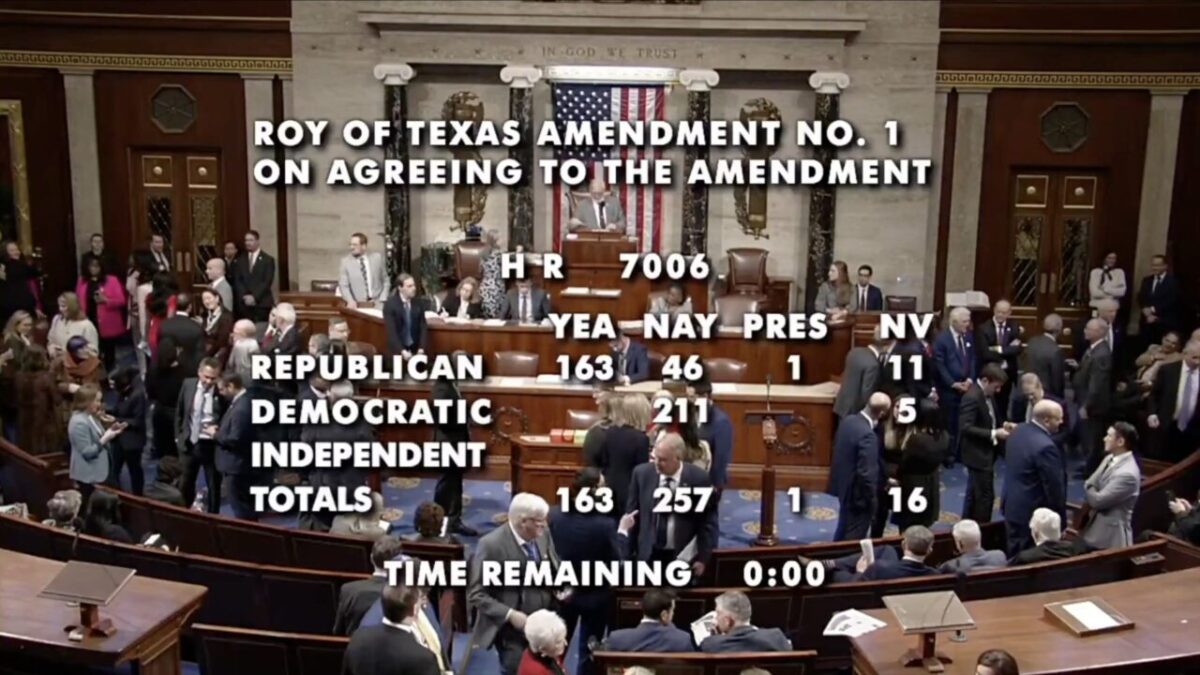
The amendment failed on Roll Call Vote No. 26 by a wide margin. The final tally was 163 ayes to 257 noes, with one member voting present and 16 not voting. All House Democrats voted against the amendment. What shocked many conservatives was that forty six House Republicans also voted no, joining Democrats and killing Roy’s effort. That cross party support for the status quo was the real story of the night for those who want judges held to higher standards.
Who crossed the aisle
The list of forty six Republicans who voted against Roy’s amendment reads like a mix of establishment names and lawmakers from competitive districts. It includes Mark Alford, Don Bacon, Rob Bresnahan Jr., Vern Buchanan, Ken Calvert, John Carter, Tom Cole, Mario Díaz Balart, Chuck Edwards, Jake Ellzey, Brian Fitzpatrick, Mike Flood, Vince Fong, Andrew Garbarino, Carlos Giménez, Mike Haridopolos, Jeff Hurd, Darrell Issa, Dusty Johnson, Dave Joyce, Thomas Kean Jr., Jen Kiggans, Kevin Kiley, Kimberlyn King Hinds, Darin LaHood, Nick LaLota, Mike Lawler, Nicole Malliotakis, Celeste Maloy, Michael McCaul, Tom McClintock, John Moolenaar, Blake Moore, Dan Newhouse, Jay Obernolte, Mike Rogers, Hal Rogers, Maria Elvira Salazar, Austin Scott, Mike Simpson, Adrian Smith, Mike Turner, David Valadao, Bruce Westerman, Rob Wittman, and Steve Womack. Many conservatives are asking why members who claim to stand for accountability sided with judges and against an amendment that targeted specific funding as leverage.
Why conservatives are outraged
Conservative voters see this as a betrayal for a few reasons. First, judges like Boasberg have been criticized for using sealed subpoenas and nondisclosure orders in high profile probes targeting Republican officials. Second, Judge Boardman drew public anger after what many viewed as a lenient sentence in a case tied to an attack on a Supreme Court Justice. For voters who want elected officials to check unelected power, the choice by 46 Republicans to protect judicial budgets looks like a defense of the institutional swamp rather than defense of the people who elected them.
What this means going forward
The defeat does not end the debate over judicial accountability. It does show that efforts to use appropriations power to push back on activist judges will face strong resistance, even inside the GOP. Conservatives will have to decide whether to keep pressing this strategy or to pursue other reforms through oversight, confirmations, and state level measures. For now the vote is a reminder that wins on paper do not always translate to wins on the floor of the House.
"We have a situation right now where judges abuse their power, plain and simple.
In particular, they've harassed staff members. People raise the question, why you zero out staff? Well, I tell you, ask Dan Scavino, Mark Meadows, or a number of the people that have been targeted… pic.twitter.com/ZVNIzuZn7C
— Rep. Chip Roy Press Office (@RepChipRoy) January 14, 2026
MORE BETRAYAL: Chip Roy offered an amendment to defund the staff budgets for Judges Boasberg and Boardman, two of the most rogue, leftist judges in the federal courts.
46 REPUBLICANS voted with Democrats to stop it.
The Deep State survives because our real enemies are within… pic.twitter.com/pcVAjBwVJJ
— Wall Street Mav (@WallStreetMav) January 14, 2026
GOP No's on Rep. Chip Roy's amendment to the two-bill spending package to reduce the DC District and Appeals Court funding by 20% and strikes the salary and expense funding for Judges Boasberg and Boardman’s staff.
Alford
Bacon
Bresnahan
Buchanan
Calvert
Carter (TX)
Cole…— Wade Miller (@WadeMiller) January 14, 2026
WE’D LOVE TO HEAR YOUR THOUGHTS! PLEASE COMMENT BELOW.
JIMMY
Find more articles like this at steadfastandloyal.com.
Leave a Comment